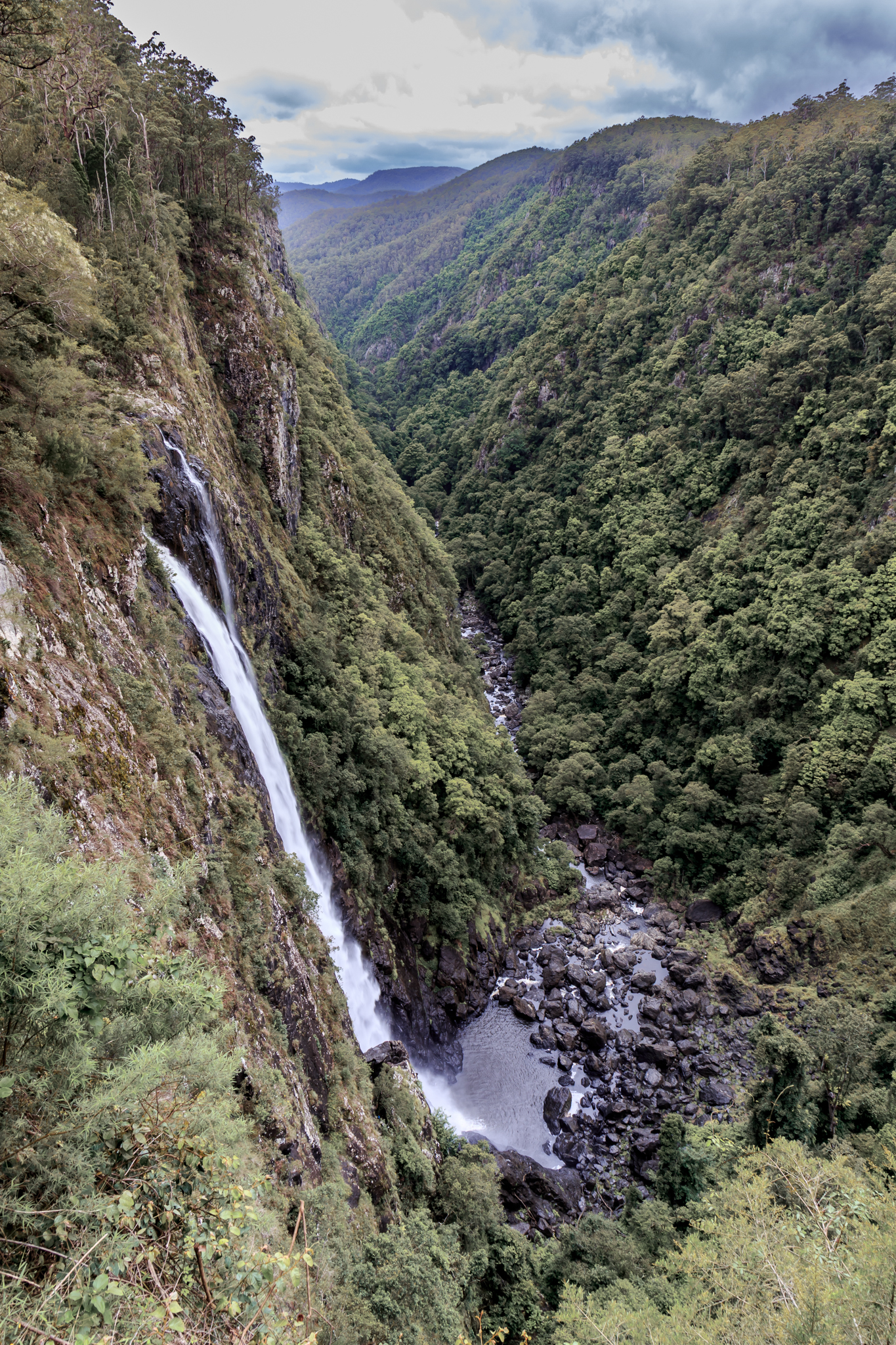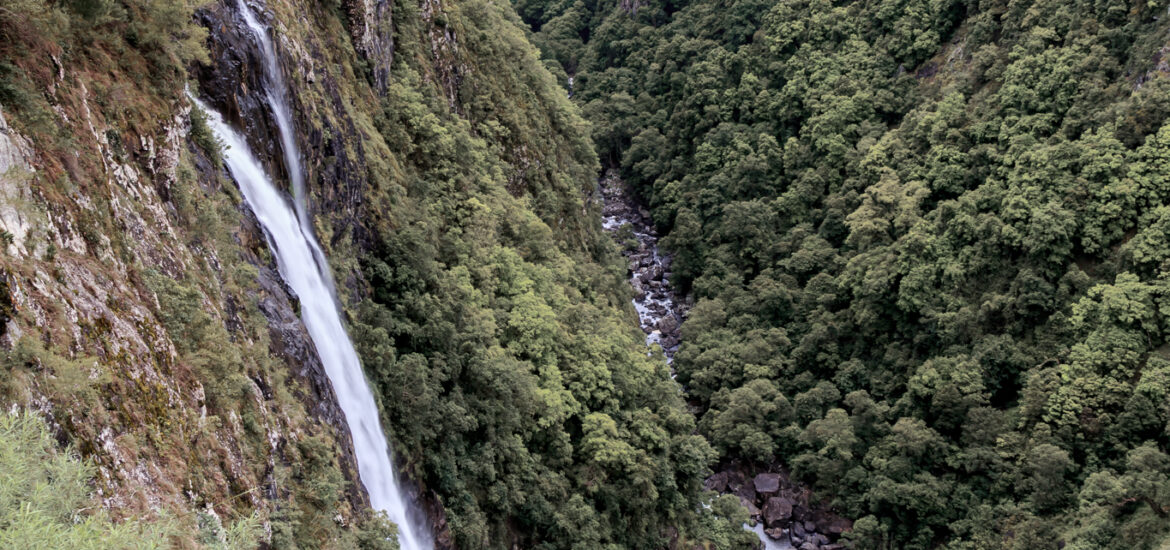
This weekend, Time Out Sydney published an article highlighting a breathtaking waterfall “worth driving for.” Reading it stopped me in my tracks — because just two weeks earlier, I had been standing at that very lookout, camera in hand, taking in the same remarkable view.
The waterfall is Ellenborough Falls, one of the tallest waterfalls in Australia. Located roughly four and a half hours north of Sydney, it plunges dramatically into a vast valley below, surrounded by rugged escarpments and dense forest. It is the kind of landscape that reminds you just how expansive and varied regional New South Wales can be.
At the time of my visit, we were staying in Port Macquarie, a coastal town better known for its beaches and relaxed seaside atmosphere than for towering hinterland waterfalls. Yet one of the joys of that region is how quickly the scenery changes. A short drive inland and the landscape begins to rise and fold into subtropical rainforest, winding country roads and mist-covered ridgelines.
The journey itself became part of the story.
We followed narrow roads that curved gently upward, moving away from the coast and into lush hinterland terrain. The air felt cooler as we gained elevation. Fern-filled gullies and pockets of eucalyptus forest lined the roadside, and occasional clearings revealed sweeping views across layered valleys fading into soft blue distance. There is something deeply grounding about driving through country like this — unhurried, immersive, and quietly spectacular.
By the time we reached the lookout at Ellenborough Falls, the atmosphere had shifted again. The valley opened wide and expansive before us. The waterfall itself seemed to drop almost endlessly, a ribbon of white water cutting through the green cliff face before disappearing into the depths below.
It was immediately clear to me that this was not an image to capture casually.
Choosing the Composition
When photographing landscapes, composition is everything. It shapes how the viewer experiences scale, depth and emotion. Standing at the lookout, I knew that a vertical frame would best tell the story of this place.
A horizontal composition would have captured the width of the valley, but it would have reduced the visual drama of the waterfall’s height. By turning the camera vertically, I was able to emphasise the sheer drop of the falls while still including the vast valley stretching beyond. The result balances power and perspective — the waterfall commanding attention in the foreground, with rolling landscape and sky providing context behind it.
I also left deliberate breathing room around the edges of the frame. When photographing for both print and digital display, I am always conscious of how an image might later be cropped for different formats, particularly for social media or web use. Allowing space within the composition ensures flexibility without sacrificing key details.
The light that day was soft and diffused, filtered through high cloud. Rather than strong contrast or dramatic shadows, the scene carried a gentle, almost nostalgic mood. Mist lingered in the distance, subtly softening the far hills and enhancing the sense of depth. It was a moment of quiet grandeur rather than spectacle — and that subtlety is something I wanted to preserve in the final image.
Crafting the Final Image
Back on my Mac in Sydney, the real shaping of the photograph began. Post-processing is often misunderstood; it is not about altering reality, but about refining and honouring what was experienced in the moment.
Using Adobe Lightroom Classic, I carefully adjusted tone and colour to reflect the atmosphere I remembered. Rather than pushing vibrancy or contrast aggressively, I leaned into a softer, more timeless aesthetic. Subtle tonal shifts helped enhance the layered depth of the valley. Gentle contrast defined the waterfall without making it appear harsh. Highlights were balanced to preserve detail in the water while keeping the sky natural and restrained.
I chose to introduce a slight nostalgic film-inspired finish — not heavy-handed or stylised, but enough to give the image a sense of quiet character. Film has a way of softening transitions between tones, and that quality suited this landscape perfectly. The aim was to create an image that feels enduring, not trend-driven — something that could sit comfortably in a contemporary home or corporate space without dating quickly.
Sharpening was applied thoughtfully, particularly for screen display and large-format printing. Landscapes benefit from crisp detail, but over-sharpening can destroy the subtlety of atmosphere. Balance is key.
From Landscape to Wall Art
For me, landscape photography is not simply about documenting scenery. It is about translating place into presence — creating an image that can transform a space and evoke feeling long after the journey itself has ended.
Each print of this Ellenborough Falls photograph is produced locally in Sydney using a trusted professional fine art printer. Working locally allows me to oversee quality personally, ensuring accurate colour reproduction, strong tonal range and sharp detail. The paper stock and print process are selected to enhance depth and texture, giving the image a physical presence that digital screens simply cannot replicate.
When displayed as wall art, the vertical composition becomes especially powerful. The height of the frame draws the eye upward, echoing the vertical drop of the waterfall itself. In a home setting, it can introduce a sense of calm and expansiveness. In a corporate environment, it offers a subtle but striking connection to the Australian landscape — grounding, inspiring and reflective.
The Value of Regional Landscapes
New South Wales is often celebrated for its coastline and iconic city views, yet its inland regions offer equally compelling beauty. Ellenborough Falls is a reminder that some of the most remarkable landscapes lie just beyond the familiar.
Driving inland from the coast, climbing into misty hinterland and standing before a waterfall of this scale reinforces a simple truth: Australia’s landscapes are vast, varied and deeply photogenic. Capturing them is both a privilege and a responsibility.
When I later saw the feature in Time Out Sydney, it felt like a quiet affirmation. This was indeed a place worth driving for. But more than that, it was a place worth pausing for — observing carefully, composing thoughtfully, and preserving with intention.
Photography allows those moments to live on. Not just as memories stored on a hard drive, but as tangible pieces of art that bring the atmosphere of a place into everyday life.
If you are drawn to landscapes that carry a sense of depth, perspective and understated drama — and that tell a story of regional exploration — Ellenborough Falls is truly something special.